
The Best Way to Showcase Your Photos to Customers
Posted on Thursday, April 02 2026 04:59:23 PM in Blog by Richard Silver
One of the most important aspects of selling photography online isn’t just the images themselves—it’s how those images are presented to potential buyers. Over the years, I’ve learned that even the strongest photographs can be overlooked if they’re not displayed in a way that helps customers visualize them in their own space. As a fine art architectural photographer selling prints directly through my website, I’ve spent a significant amount of time refining how my work is showcased to make the experience as seamless, engaging, and effective as possible.
When someone visits a photography website with the intention of purchasing fine art prints, they are not just browsing images—they are imagining how that piece will look in their home, office, or commercial space. Because of that, presentation becomes just as important as the photography itself.

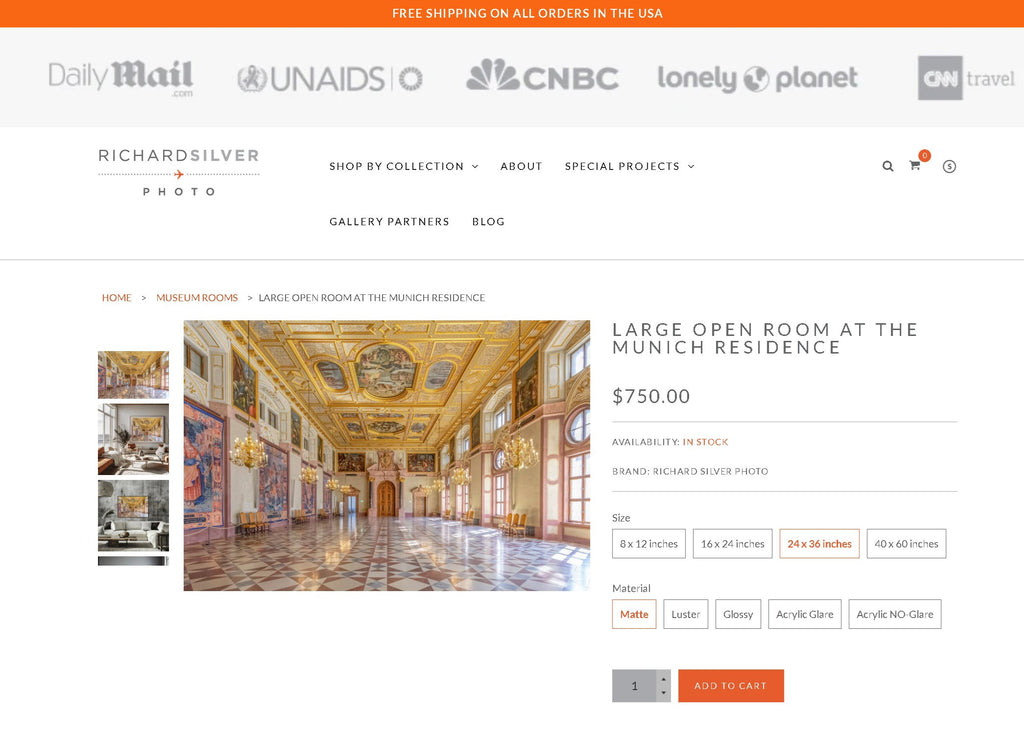
One of the most effective tools I use to bridge that gap is working with Artadum to display my photography in real interior environments. Showing a photograph on a blank white background doesn’t always translate to how it will feel in a living room, hotel suite, or corporate office. By placing my images into realistic room settings, collectors and designers can immediately understand scale, proportion, and overall impact. This approach is especially important for large-scale wall art, where size and placement play a major role in the decision-making process.
These real-room mockups help answer one of the biggest questions buyers have: “How will this look in my space?” Instead of leaving that up to imagination, the visuals provide clarity and confidence, which ultimately leads to more informed purchasing decisions.
Beyond visualization, another critical factor in showcasing photography online is giving visitors the ability to fully experience the image itself. On my website, every photograph can be enlarged to full screen, allowing viewers to see the details, composition, and quality up close. This is especially important for fine art photography prints, where sharpness, texture, and subtle tonal variations matter. Whether someone is viewing architectural interiors, cityscapes, or landscapes, the ability to explore the image in detail creates a stronger connection to the work.

Equally important is how the website allows users to navigate and explore the collection. A well-organized structure makes it easier for visitors to find exactly what they are looking for, whether that’s a specific location, style, or price point. My website offers multiple viewing options, including the ability to sort images alphabetically, by date, or by price. This flexibility allows collectors, interior designers, and first-time buyers to browse in a way that fits their needs.
Formatting options also play a key role in how photography is presented. Clean layouts, structured collections, and easy-to-navigate dropdown menus allow visitors to move through different categories without feeling overwhelmed. Whether someone is exploring architectural photography, travel photography, or coastal images, the goal is to create a smooth path that encourages them to continue browsing.
Another important aspect of showcasing photography effectively is making the purchasing process as simple as possible. If a customer finds a piece they love, there should be no friction in completing the purchase. On my website, collectors can order photography prints directly, with a streamlined checkout experience that removes unnecessary steps.
Offering free shipping is another factor that can make a significant difference. For many buyers, especially those purchasing large wall art or multiple pieces, shipping costs can be a deterrent. By including free shipping, the process becomes more transparent and appealing, allowing customers to focus entirely on selecting the right piece for their space.
All of these elements—real-room mockups, full-screen image viewing, flexible browsing options, and a seamless purchasing experience—work together to create a website that is not just a portfolio, but a functional platform for selling fine art photography prints.
From an SEO perspective, these features also contribute to better performance in search engines. Well-structured pages, clear navigation, and detailed image views increase the amount of time visitors spend on the site, which signals to Google that the content is valuable and relevant. Additionally, organizing collections and using descriptive titles helps improve visibility for searches related to architectural photography, travel photography prints, and large wall art.
Ultimately, the goal is to create an experience that mirrors what a customer might feel when viewing artwork in a gallery, but with the added convenience of browsing and purchasing online. By combining strong photography with thoughtful presentation and user-friendly design, it becomes much easier to turn visitors into buyers.

As online art sales continue to grow, photographers need to think beyond simply uploading images. The way work is displayed, organized, and presented can have a direct impact on engagement, traffic, and ultimately sales. For me, refining these elements has been just as important as creating the photographs themselves.
If you’re looking to purchase fine art photography prints, explore architectural photography, or find large wall art for your home or business, the experience should feel effortless, immersive, and inspiring from the moment you arrive on the site.
FOLLOW ME ON INSTAGRAM @richardsilverphoto